
| 澳洲空军文章:黑丝对F35,F-18意味着什么("toast" and "cinders") | |||||||||||||||||||
| 送交者: 2010年12月31日07:54:14 于 [世界军事论坛] 发送悄悄话 | |||||||||||||||||||
|
|
|||||||||||||||||||
|
Air Power Australia - Australia's Independent Defence Think Tank Air Power Australia NOTAM 31st December, 2010 © 2010 C. L. Mills
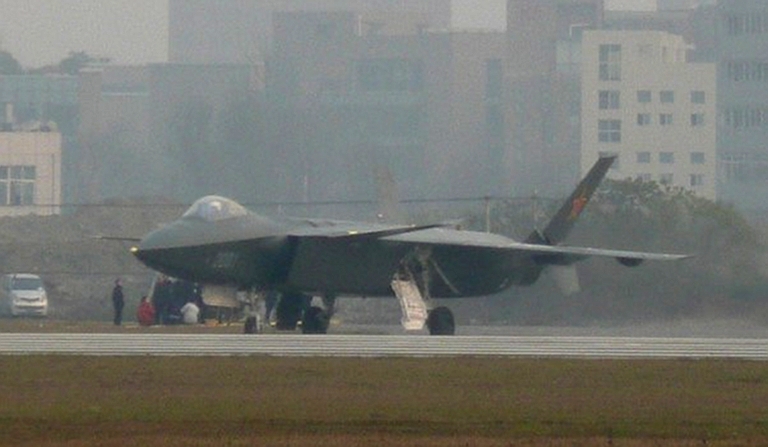
| ).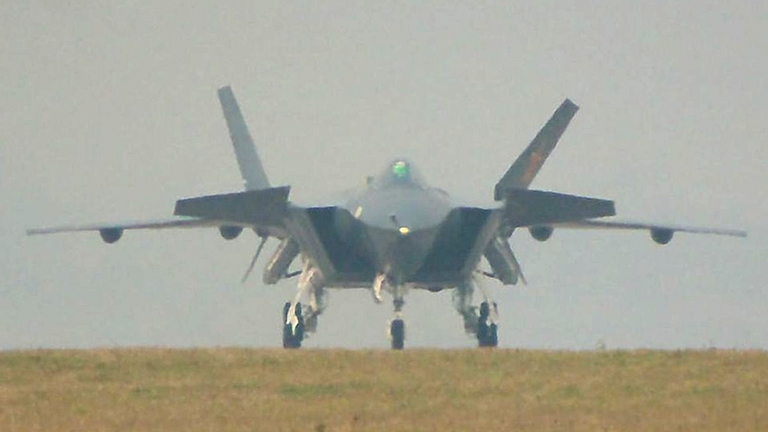 First prototype of the Chengdu J-XX or J-20 Very Low Observable (VLO) fighter aircraft. A large high performance design with excellent stealth shaping, this aircraft is expected to be become the centrepiece of the PLA-AF fighter fleet. It combines supersonic cruise, large range and persistence, and stealth (Chinese InternetThe latest monograph by Dr Kopp, as published in the peer reviewed APA Analyses journal, is an in-depth and broad scientific study of what exponential growth laws - like Moore's Law - mean for current and future combat aircraft. It is, and intentionally so, a scientific paper, and confines itself to the technical dimensions of this problem. What do exponential growth laws mean for Western nations in terms of strategy and national policy? That is the subject explored in this NOTAM | 1.Let us start with a familiar situation and one for which you already know the end-result. Suppose you are driving down a road on a dark night, not looking in the rear-view mirror, but admiring the fancy digital display of the dashboard, with the moving GPS map, the instruments telling you about speed, range, altitude, engine condition, cabin temperature, while the iPod interface slips soothing songs into your brain. The mobile phone rings and you reach to tap the control column to take the call. This is a fatal distraction because a sharp turn appears ahead, you miss it, and in an instant, there is a violent disintegration of these marvellous technological displays as the car leaves the road and rolls end-over-end down a steep embankment. Over the past few days, images have emerged of the new Chinese Stealth Fighter, the J-XX or the J-20. On the 29th January 2010, the Russians first flew the PAK-FA, and the Su-35S, which first flew on 28th February 2008, is expected to achieve IOC in early 2011. Meanwhile, back at the US fighter-farm, the JSF which first flew on 15th December 2006, has experienced continuing difficulties with the STOVL version and is likely to enter a substantial re-design programme in 2011, adding more years and even greater costs to the already frequently-extended development phase. By the time the F-35 makes IOC (if it ever does) it will be, to use that well-known technical term, ‘toast’. Even if an extensive redesign produces an aircraft that meets the March 2000 Joint Operational Requirements Document (JORD), the “Su-35S, PAK-FA, J-20 world” of 2015-2020 will be much different than the “Su-27S, MiG-29 world” that existed when the JORD was first released. Most astonishingly, when gross cost overruns forced a review of the program, the JORD specifications were not updated to encompass the 2015 - 2025 air combat environment. Instead, during the ensuing process that followed the Nunn-McCurdy Breach, the Joint Requirements Oversight Council (JROC) re-verified and re-validated the F-35 JSF Operational Requirements Document of March 13, 2000, as representing a capability “essential to the national security” (refer JROCM 078-10 dated May 20, 2010). And people wonder why some refer to the Nunn McCurdy process as the “codification of silliness, if not mendacity and misfeasance | ”? |||||||||||||||||
AESA RADAR DETECTION RANGES – INDICATIVE VALUES | |||||||||||||||||||
TARGETS | Su-35S RCS ~ 3 m2 | PAK-FA / J-20 Best Case | RCS ~0.1 m2PAK-FA / J-20 Worst Case | RCS ~0.001 m2||||||||||||||||
| F-35 / APG-81 | ~82.8 NMI | ~35.4 NMI | ~11.2 NMI | ||||||||||||||||
| F/A18-E/F / APG-79 | ~111.9 NMI | ~47.8 NMI | ~15.1 NMI | ||||||||||||||||
Aircraft such as the PAK-FA and the J-20, with ‘Low Observability’ from the front aspects, can be guided by (say) a HF-band Skywave radar and SATCOM system, or VHF-band GCI radar, into a merge ‘cold nose’ and passive, but still searching on IRST and ESM. Having an aircraft first appear on the F-35 APG-81 at 20 NMI would be a very nasty surprise, demonstrated by ‘first-look, first-shot, first-kills’ by the enemy. But back to the ‘Let the missiles do the turning’ statement. Secondly, and perhaps more dangerously, the statement assumes that the missiles ‘turning’ will actually achieve a terminal missile-to-aircraft distance where the fuses detonate the warhead. Nothing is mentioned about these missiles being kinematically defeated during the ingress, and/or being confused by electronic countermeasures such as cross-eye-jamming, and/or being seduced by towed or released decoys, let alone rendered blind by the effects of the respectable stealth technology employed in the T-50 PAK-FA and J-20. The Sukhois' missile countermeasures are far superior to those employed in the F-35, probably because nobody believed the stealth advantage would be penetrated and that countermeasures, like manoeuvre, would therefore be ‘irrelevant’. However, it is reasonable to expect these countermeasures to be included in the large and spacious PAK-FA and J-20 airframes, both of which will have a credible stealth capability. The third deadly mis-assessment is that, with the missiles doing the turning and presumably the killing, egress from the fight will be a leisurely affair, with the pilots congratulating themselves on their kills. When the enemy has a first-shot and first kill advantage, and our missiles miss because of effective opposing countermeasures and genuine stealth technology, the truth is starker. When our people fly aircraft not designed for high Mach and with the prodigious fuel flows required to offset enormous drag at high speed, an enemy with a 500 - 700 knot closure rate and internal fuel reserve advantage will quickly run-down and dispatch the survivors. If the aircraft are separated at 50 NMI when the egress is started, it only takes 6 minutes with an over-take speed of 500 KTAS for the aggressors to reach guns-range, less for a WVR missile shot. As shown above, with signature reduction in the PAK-FA and the J-20, the chase-distances, fuel requirements and run-down times will, most likely, be considerably less. So, why have these non-viable US designs been allowed to persist, and the corollary question, why has the production of the USA’s only aerodynamically and kinematically competitive fighter, the F-22A Raptor, been killed? | |||||||||||||||||||
| COMBAT EFFECTIVENESS RELATED TO COMBAT PRODUCTIVITY | LETHALITY | | |||||||||||||||||
| LOW | HIGH | ||||||||||||||||||
| SURVIVABILITY | HIGH | MARGINALLY EFFECTIVE LOW PRODUCTIVITY (Lost a few, did not do much with the survivors) | HIGHLY EFFECTIVE HIGH PRODUCTIVITY (Lost a few, did a lot with the survivors) | ||||||||||||||||
| LOW | INEFFECTIVE NO PRODUCTIVITY (Lost a lot, did little with the few survivors) | MARGINALLY EFFECTIVE LOW PRODUCTIVITY (Lost a lot, did some with the few survivors) | |||||||||||||||||
| Table 1: | |||||||||||||||||||
| To conclude with a familiar scene, the F-35 and F/A-18E/F pilots of the future will have exquisitely crafted digital cockpits which will give them a crystal-clear picture of their combat environment, such that they know with unprecedented precision the moment at which they will die – assuming that Russian and Chinese stealth technology can be easily defeated. And their opponents will have the same but a more enduring view, without such high and final costs, thanks to the inexorable merging of exponential growth laws and superior aerodynamic/kinematic design into their air combat machines. | |||||||||||||||||||
 | |||||||||||||||||||


|
|
 |
 |
| 实用资讯 | |